
The electric vehicle (EV) market has undergone significant growth over the past decade, transitioning from a specialized market segment to a mainstream automotive option. Several key factors have driven this change: advances in technology, shifts in consumer demand, and increased environmental consciousness. During the early 2010s, electric vehicles faced skepticism due to their restricted driving range and elevated purchase prices.

Nevertheless, improvements in battery technology, especially lithium-ion batteries, have enhanced energy storage capacity and lowered manufacturing costs, making electric vehicles more affordable for typical consumers. In response to these developments, established automotive manufacturers have adjusted their business strategies to prioritize electric vehicle production. Tesla has been instrumental in this transition, proving that electric vehicles can deliver environmental benefits alongside high performance and premium features.
The launch of models including the Tesla Model S and Model 3 has altered consumer attitudes, demonstrating that electric vehicles can match conventional gasoline vehicles in acceleration, driving distance, and user experience. This market evolution has motivated other manufacturers to allocate substantial resources toward electric vehicle research and production, resulting in a broader selection of electric models available in different vehicle categories, including sedans, sport utility vehicles, and pickup trucks.
Key Takeaways
- Electric vehicles (EVs) are rapidly gaining popularity, transforming the automotive industry.
- Traditional automakers are adapting by investing heavily in EV technology and production.
- Governments worldwide are promoting EV adoption through incentives and supportive policies.
- Integration of renewable energy sources is crucial for maximizing the environmental benefits of EVs.
- Advances in charging infrastructure and technology are key to accelerating consumer adoption and market growth.
The Impact on Traditional Auto Manufacturers
The rise of electric vehicles has posed significant challenges for traditional auto manufacturers, many of whom have built their reputations on internal combustion engine (ICE) vehicles. As consumer demand for EVs grows, these manufacturers are compelled to adapt or risk obsolescence. Companies like Ford and General Motors have announced ambitious plans to transition their lineups toward electric models, investing billions in research and development to create competitive EV offerings.
This shift is not merely a response to market trends; it is a strategic necessity as governments worldwide implement stricter emissions regulations and consumers increasingly prioritize sustainability. Moreover, the transition to electric vehicles has forced traditional automakers to rethink their supply chains and manufacturing processes. The production of electric vehicles requires different components compared to ICE vehicles, particularly in terms of battery production and sourcing raw materials like lithium, cobalt, and nickel.
This has led to partnerships with battery manufacturers and investments in mining operations to secure a stable supply of essential materials. Additionally, traditional manufacturers are grappling with the need to retrain their workforce and retool factories designed for ICE production, which presents both logistical challenges and financial implications.
Government Initiatives and Incentives
Governments around the world have recognized the importance of promoting electric vehicles as part of broader strategies to combat climate change and reduce greenhouse gas emissions. Many countries have implemented a variety of initiatives and incentives aimed at encouraging the adoption of EVs among consumers. These measures often include tax credits, rebates, and grants for purchasing electric vehicles, as well as investments in charging infrastructure to alleviate range anxiety among potential buyers.
In the United States, for instance, federal tax credits can provide consumers with up to $7,500 off the purchase price of an electric vehicle. Additionally, several states offer their own incentives, which can further reduce the cost of ownership. Beyond financial incentives, governments are also setting ambitious targets for phasing out the sale of new gasoline-powered vehicles.
The United Kingdom has announced plans to ban the sale of new petrol and diesel cars by 2030, while California aims to achieve similar goals by 2035. Such regulatory frameworks not only stimulate consumer interest but also signal to manufacturers that the future of mobility is electric.
The Role of Renewable Energy in Electric Vehicles
The environmental benefits of electric vehicles are closely tied to the sources of energy used to charge them. While EVs produce zero tailpipe emissions, the overall impact on greenhouse gas emissions depends significantly on the energy mix of the grid from which they draw power. As renewable energy sources such as solar, wind, and hydroelectric power become more prevalent, the carbon footprint associated with electric vehicle charging diminishes substantially.
For example, in regions where renewable energy constitutes a significant portion of the electricity supply, such as California or Denmark, charging an electric vehicle can result in lower overall emissions compared to driving a conventional gasoline vehicle. This synergy between electric vehicles and renewable energy is crucial for achieving climate goals. Furthermore, advancements in energy storage technologies are enabling better integration of renewable sources into the grid, ensuring that electric vehicles can be charged with clean energy even during periods of low generation.
The Future of Charging Infrastructure
As the adoption of electric vehicles continues to rise, the development of robust charging infrastructure becomes increasingly critical. A comprehensive network of charging stations is essential for alleviating range anxiety and ensuring that EV owners can conveniently recharge their vehicles. Currently, charging infrastructure varies widely by region; urban areas tend to have more charging stations compared to rural locations.
This disparity presents challenges for potential EV buyers who may be concerned about access to charging facilities. To address these challenges, both public and private sectors are investing heavily in expanding charging networks. Companies like ChargePoint and Electrify America are working to install fast-charging stations along highways and in urban centers, while governments are also funding initiatives to increase accessibility in underserved areas.
The emergence of ultra-fast charging technology is another promising development; these stations can recharge an EV’s battery to 80% in as little as 30 minutes, making long-distance travel more feasible for electric vehicle owners. As charging infrastructure continues to evolve, it will play a pivotal role in shaping consumer perceptions and driving further adoption of electric vehicles.
Consumer Adoption and Market Trends

Consumer adoption of electric vehicles is influenced by a variety of factors including price, range anxiety, environmental concerns, and technological advancements. Recent surveys indicate that an increasing number of consumers are considering purchasing an electric vehicle as their next car. This shift is particularly pronounced among younger generations who prioritize sustainability and are more open to embracing new technologies.
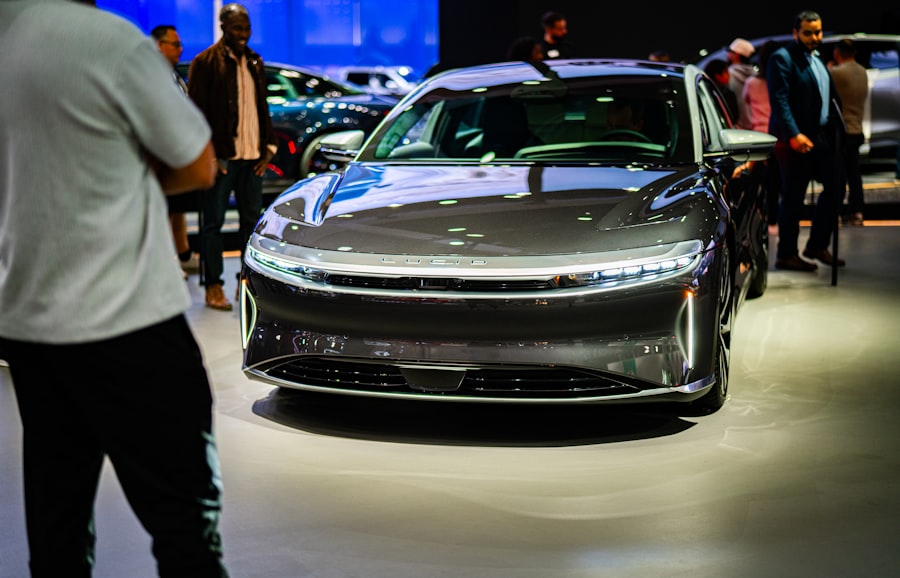
Market trends also reveal a growing diversity in the types of electric vehicles available. While early adopters primarily had access to compact cars like the Nissan Leaf or Tesla Model S, today’s market features a wide array of options including SUVs like the Ford Mustang Mach-E and luxury sedans like the Lucid Air. This diversification caters to different consumer preferences and needs, making it easier for individuals from various demographics to find an EV that suits their lifestyle.
Additionally, as battery technology continues to improve, ranges are increasing—many new models now offer over 300 miles on a single charge—further alleviating concerns about range anxiety.
Technological Advancements in Electric Vehicles
Technological advancements are at the heart of the electric vehicle revolution. Innovations in battery technology have been particularly transformative; researchers are exploring solid-state batteries that promise higher energy densities and faster charging times compared to traditional lithium-ion batteries. These advancements could lead to longer ranges and shorter charging durations, addressing two of the most significant barriers to widespread EV adoption.
Moreover, advancements in software and connectivity are enhancing the overall user experience for electric vehicle owners. Features such as over-the-air updates allow manufacturers to improve vehicle performance and add new functionalities without requiring physical recalls or service visits. Additionally, smart charging solutions enable users to optimize charging times based on electricity rates or grid demand, further integrating EVs into smart home ecosystems.
As these technologies continue to evolve, they will not only improve the performance and convenience of electric vehicles but also contribute to a more sustainable transportation ecosystem.
Environmental Benefits of Electric Vehicles
The environmental benefits of electric vehicles extend beyond their zero tailpipe emissions. By reducing reliance on fossil fuels for transportation, EVs contribute significantly to lowering greenhouse gas emissions when charged from renewable energy sources. Studies have shown that even when charged from grids reliant on fossil fuels, electric vehicles typically produce fewer emissions over their lifetime compared to traditional gasoline-powered cars.
Furthermore, electric vehicles can play a crucial role in reducing urban air pollution—a pressing issue in many cities worldwide. The transition from internal combustion engines to electric drivetrains can lead to improved air quality by decreasing harmful pollutants such as nitrogen oxides (NOx) and particulate matter (PM). This shift not only benefits public health but also aligns with global efforts to combat climate change by reducing overall carbon footprints associated with transportation.
In conclusion, the rise of electric vehicles represents a significant shift in the automotive landscape driven by technological advancements, changing consumer preferences, government initiatives, and environmental considerations. As traditional manufacturers adapt to this new reality and infrastructure continues to develop, the future looks promising for electric mobility as a cornerstone of sustainable transportation solutions.
In the ever-evolving auto industry, staying informed about government policies is crucial for manufacturers and consumers alike. A recent article discusses the latest updates in government policy and how they impact the automotive landscape. For more insights, you can read the article here: Government Policy Updates: Navigating the Changing Landscape.